3D perception that understands the site,
technology that moves the robot
We work out where the robot stands, recognise precisely what it has to work on, and carry sensor data through to the robot system itself.
Flexibility and precision,
solved in separate layers
One layer reads the site, one adapts to a site it has never seen, and one does the work.
Change a layer and the others stay as they are.
Start away from the dock,
hold position as the site changes
Knowing where the robot stands is where every task begins. We match the prior map against what the sensors see right now to recover the initial pose, then carry straight on into continuous tracking.
Map registration is coupled directly into the estimate, so five kilometres in, the position has not slipped. Stock moves and the sensor is briefly blocked, and the estimate holds.
Read more →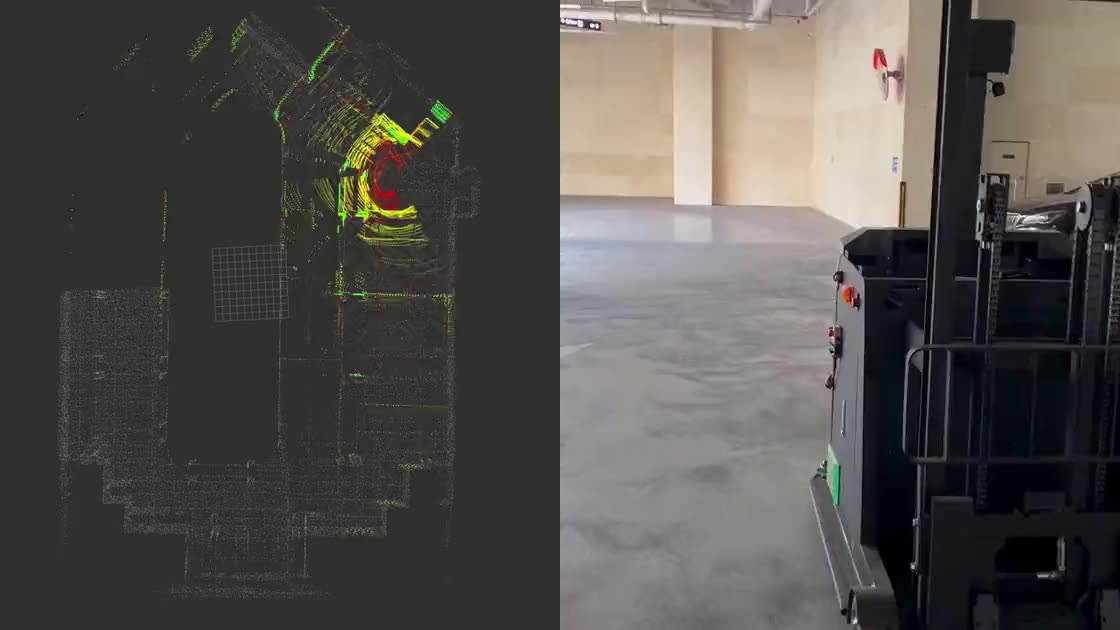
Half a millimetre,
from stereo cameras alone
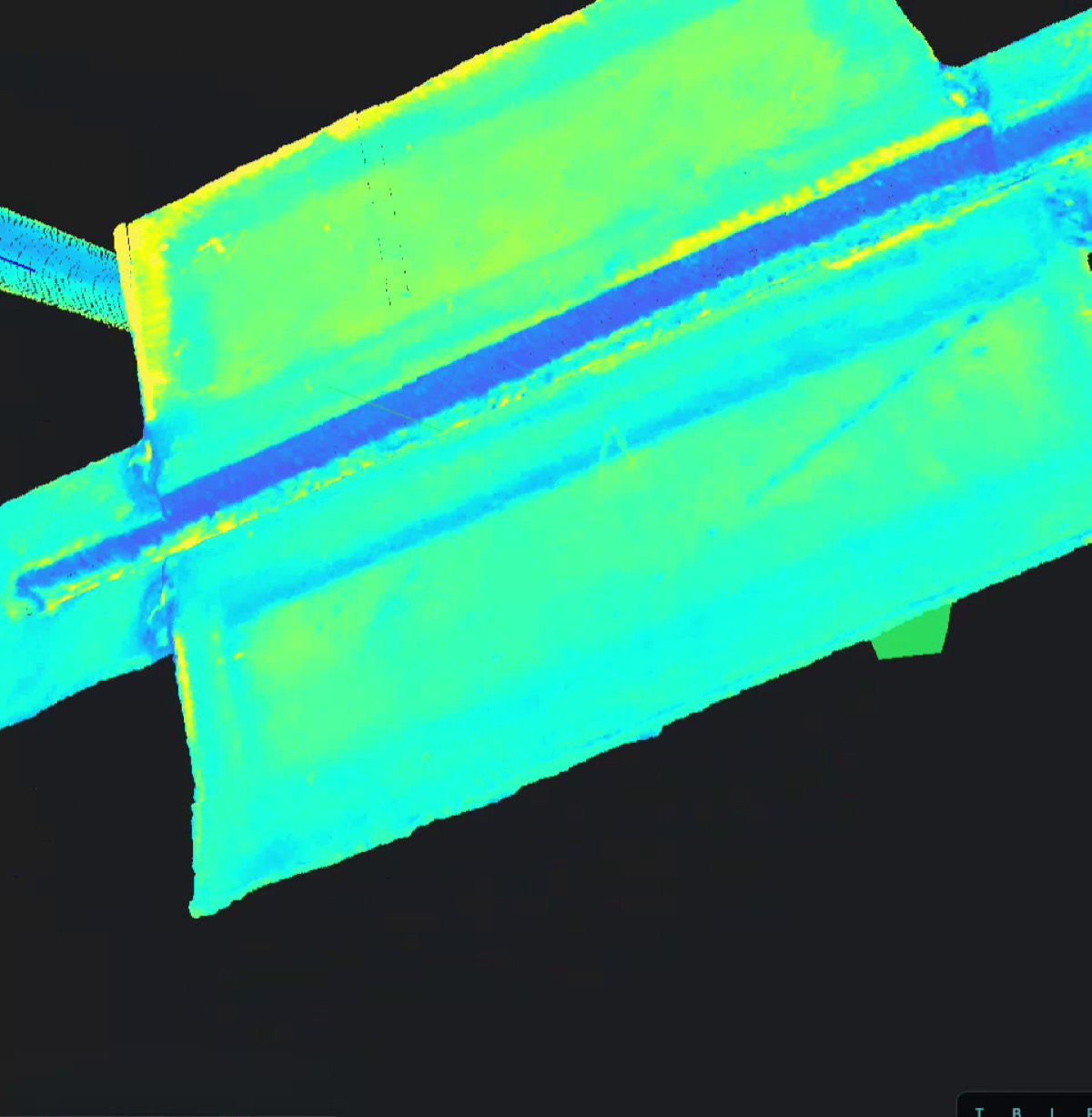
A model trained on the disparity between two views rebuilds the depth and shape of the workpiece. Inference on site runs on stereo images alone.
In the coil workpiece evaluation it held a mean error of 0.5–0.6 mm against Alsontech measurements. It reads gaps, steps and curved surfaces, then hands the weld datum and position correction to the robot.
Read more →Sensors, algorithms and remote
visualisation on one stack
Robot System is our own robot platform. It carries sensor capture, delivery between algorithms, frame management, remote visualisation, recording and replay on a single stack.
Within one machine, shared memory cuts the cost of moving large images and point clouds; between machines, remote transport carries the floor's data. It sits on top of what you already run.
Read more →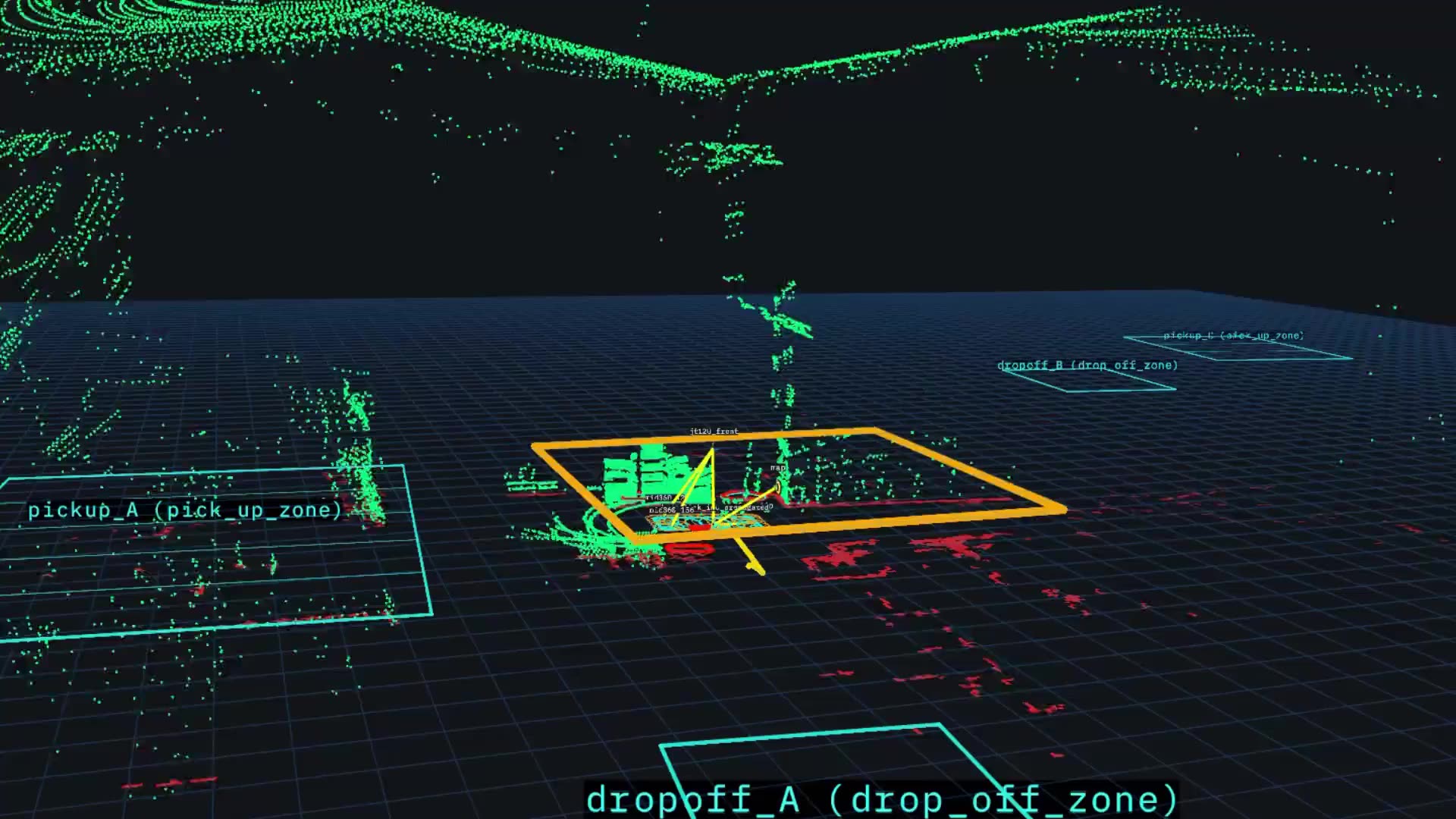
Already first
in the world
First worldwide on the Waymo open benchmark
On the public leaderboard for 3D perception in autonomous driving, our co-CEO Seungyeop Sun placed first. The model Waymo submitted itself came thirteenth.
Waymo Open Dataset · 3D Semantic Segmentation · 2022Two patents granted for real-time 3D registration
Granted for registration and for assembly progress evaluation. Six more are filed and under examination.
KR 10-2983357 · KR 10-2893463First in Korea to pass 1 mm in a government programme
Free-form butt welding, developed jointly with HD Hyundai Samho, was verified by a third party.
March 2026The numbers do the talking
Data stays on premises. Nothing is sent to an external cloud.
We speak
your stack
We do not make you conform to our specification. The data and commands you need are delivered in the operating system and the language you already run. Windows or Linux, and any perception software you already own can sit on top unchanged.
- Interface specification
- SDK and per-language clients
- Example code and a mock server
- Test tooling and a data dictionary
- Version compatibility policy
Find out with LiOps
whether it works on your floor
Send us your drawings and site conditions and we will come back with whether it applies and what to expect.